
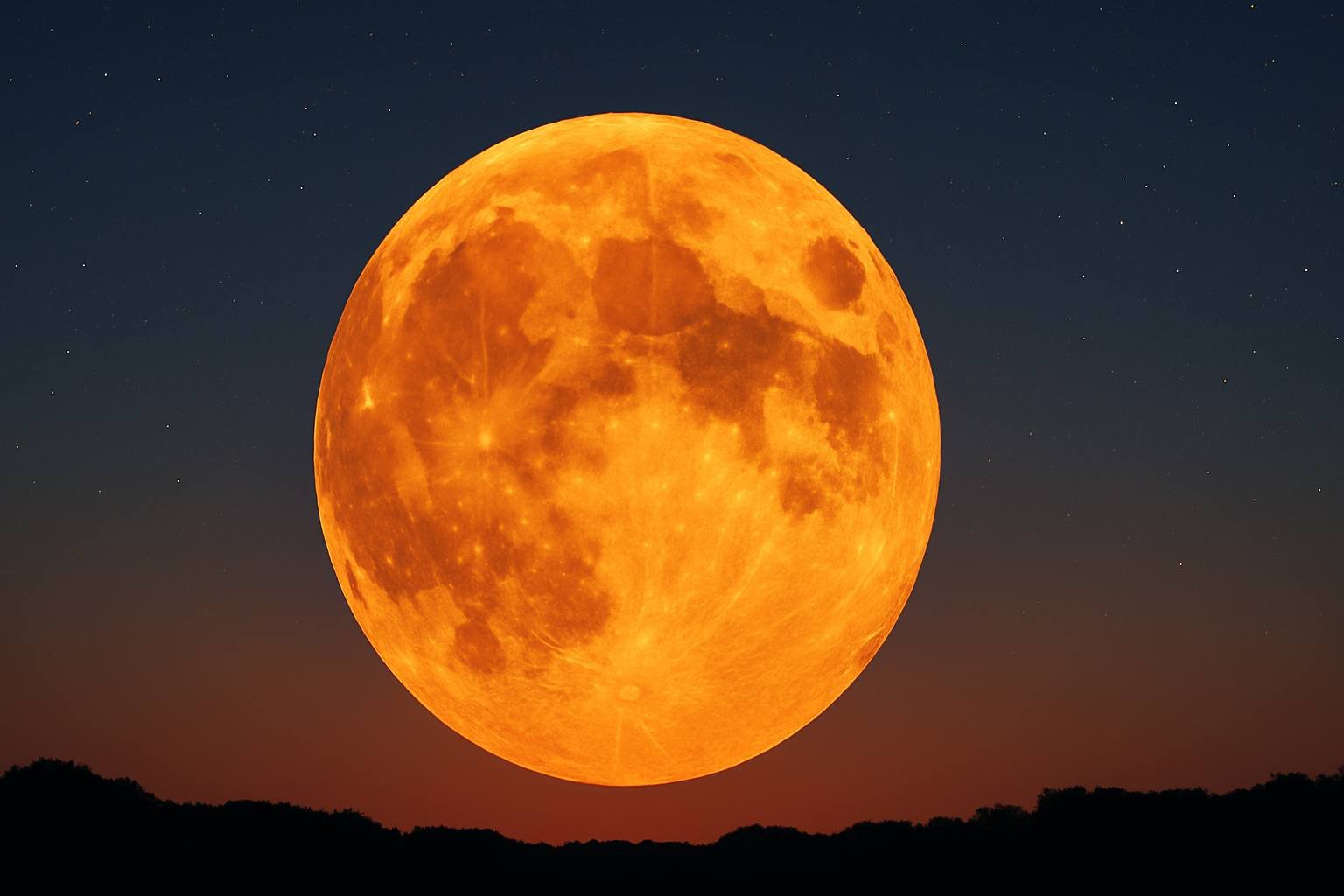
If you’ve looked up at the sky and noticed the Moon glowing in shades of orange, red, or even deep amber, you’re not imagining things. An orange Moon is a real phenomenon, and it has clear scientific causes rooted in light, atmosphere, and viewing angles.
This guide explains exactly why the Moon looks orange tonight, what natural events influence its color, and how to know whether you’re seeing a normal atmospheric effect or something rare like a lunar eclipse or wildfire haze.
Let’s break it down.
What Causes the Moon to Look Orange?
The Moon does not produce its own light. What you see at night is sunlight reflecting off the Moon’s surface. When that light passes through the Earth’s atmosphere, the atmosphere determines what color reaches your eyes.
The main reason the Moon appears orange is scattering of light. As moonlight travels through more layers of the atmosphere, the shorter wavelengths such as blue and violet scatter away, allowing only longer wavelengths like red and orange to pass through. This creates the warm, orange glow you see.
Atmospheric Scattering: The Primary Cause
Atmospheric scattering is the dominant factor behind an orange Moon. When the Moon is low in the sky, its light must travel through a much thicker portion of the atmosphere than when it is overhead. The atmosphere acts like a filter.
Blue, green, and violet light scatter easily. Orange and red wavelengths do not scatter as much, so they pass through the atmosphere more directly. The result is an orange or reddish Moon.
This is the same reason sunrises and sunsets appear red and orange.
Why the Moon Looks More Orange Near the Horizon
The Moon appears most orange when it is close to the horizon. This happens because:
- The Moon is being viewed through more atmospheric layers
- Dust, pollution, smoke, and moisture thicken this atmospheric path
- Long-wavelength red and orange light travel more easily through this thicker atmosphere
Even on a perfectly normal night with clear weather, a low moon will naturally appear warmer in color.
Dust, Pollution, and Smoke Make the Moon Even More Orange
The atmosphere contains more than just air. It also contains particles like smoke, dust, ash, and pollution. These particles scatter shorter wavelengths more aggressively, which enhances the red or orange effect.
Common causes include:
Wildfire Smoke
Large wildfires release massive amounts of fine particles that travel long distances. Smoke-filled skies often cause the Moon and even the Sun to turn visibly orange or red.
Sand and Dust Storms
Desert dust blown into the atmosphere thickens the air and increases red wavelength visibility.
Air Pollution
Industrial pollution, vehicle emissions, and urban smog all contribute to an orange or yellow-tinted Moon.
Humidity and Water Vapor Can Change the Moon’s Color
Moisture in the air also affects the appearance of the Moon. Water droplets scatter light differently and can create a more yellow or orange tint, especially on humid evenings or after heavy rainfall.
High humidity often results in:
- A hazy atmosphere
- Thick, low-contrast skies
- Warm-colored Moon glow near the horizon
The Moon Can Look Orange During a Lunar Eclipse
A total lunar eclipse is one of the rare moments when the Moon turns deep orange or red even when high in the sky. During a lunar eclipse, sunlight passes through the Earth’s atmosphere before reaching the Moon.
Only red and orange wavelengths bend around Earth and reach the lunar surface, giving it the reddish color known as the Blood Moon effect.
During a lunar eclipse, the color can range from:
- Orange
- Copper
- Deep red
- Dark brown
The exact shade depends on atmospheric conditions at the time of the eclipse.
Weather Conditions That Make the Moon Look Orange
Several weather factors impact how the Moon’s color appears:
Fog
Fog scatters and absorbs light, often making the Moon appear dim and more orange as it rises.
Haze
High humidity combined with dust creates hazy skies that warm the Moon’s color.
Storm Residue
After storms, airborne particles and moisture can alter the Moon’s brightness and hue.
Seasonal Changes and an Orange Moon
Different seasons have different atmospheric conditions. For example:
- Summer has more humidity, smog, and wildfire smoke
- Winter has more pollution trapped in cold air layers
- Fall often produces dusty, dry conditions
All these seasonal variations can make the Moon appear orange more often at certain times of the year.
The Moon Is Not Actually Changing Color
Even when it appears orange or red, the Moon’s surface isn’t changing. Only the light passing through Earth’s atmosphere creates this effect.
The surface remains the same color; the atmosphere acts like a filter.
How to Tell Which Cause Is Making the Moon Orange Tonight
If the Moon looks unusually orange, here’s how to identify the cause:
Check the Moon’s Position
If it is low on the horizon, atmospheric scattering is the reason.
Check the Air Quality Index
Poor air quality indicates dust, smoke, or pollution influencing the color.
Check for Wildfire Activity
Nearby or even distant wildfires can send smoke across entire regions.
Check Weather Conditions
Humidity, haze, and fog amplify the orange tint.
Check the Lunar Calendar
If there is a scheduled lunar eclipse, the orange color may be part of the eclipse event.
Is an Orange Moon Dangerous or Bad?
An orange Moon is not harmful and does not indicate anything dangerous. It is a normal optical effect. However, if the color is due to poor air quality or wildfire smoke, the atmosphere itself may be unhealthy even though the Moon’s appearance is harmless.
Can an Orange Moon Predict Weather?
An orange or red Moon does not predict weather, but it can reflect current atmospheric conditions such as dust, haze, pollution, or humidity. These conditions can sometimes be associated with weather patterns, but the Moon itself is not a weather predictor.
Final Thoughts
If the Moon looks orange tonight, you’re witnessing a natural and scientifically consistent phenomenon. Whether it’s caused by atmospheric scattering, smoke, dust, humidity, or a lunar eclipse, the orange color is simply the result of how Earth’s atmosphere filters and bends moonlight.
The Moon itself remains unchanged, but the air between you and the Moon adds color, creating a beautiful and memorable view.