 11
11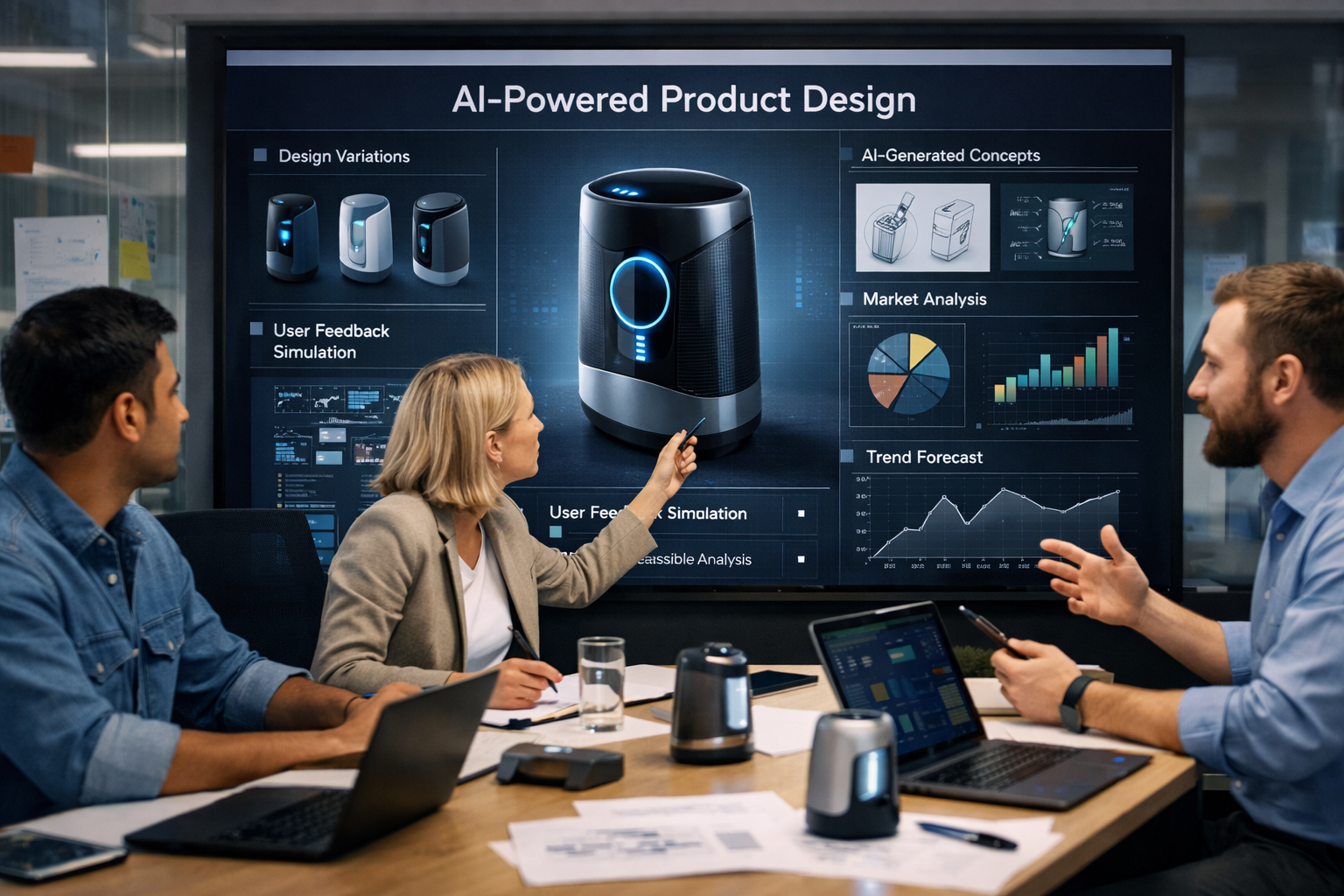
Generative artificial intelligence has moved beyond experimentation and into the core of modern business strategy. In 2026, companies across industries are integrating AI systems that can create content, analyze data, automate workflows, and support decision-making at scale. What started as tools for generating text and images has evolved into enterprise-grade platforms capable of transforming operations, marketing, customer experience, and product development.
Generative AI in Business 2026 is transforming industries by enabling intelligent automation, data-driven decision-making, and scalable innovation for sustainable growth.
The shift is not just technological; it is structural. Businesses are redesigning processes around AI capabilities rather than simply adding AI as an accessory. This transformation is shaping a new competitive landscape where agility, data intelligence, and automation define market leadership.
Generative AI refers to machine learning systems capable of producing new content, insights, or outputs based on patterns learned from data. Unlike traditional automation, which follows predefined rules, generative AI adapts dynamically and can respond to complex prompts, analyze ambiguous information, and generate human-like results.
From marketing copy and product descriptions to code generation and financial forecasting, generative AI reduces time-to-execution while enhancing output quality. Businesses that leverage it effectively are seeing improvements in productivity, customer engagement, and revenue growth. The AI revolution is reshaping the global economy by transforming how businesses operate, innovate, and compete through intelligent automation and data-driven decision-making.
Forward-thinking organizations are embedding AI directly into their operational backbone. Customer relationship management systems now include AI-powered assistants. Enterprise resource planning tools incorporate predictive analytics. E-commerce platforms use AI for personalized recommendations and inventory forecasting.
Rather than functioning as standalone tools, AI systems now operate as integrated intelligence layers across departments.
Many technology firms have shifted toward AI-as-a-Service offerings. Businesses subscribe to scalable AI solutions instead of building models from scratch. This approach reduces entry barriers and enables even small and medium enterprises to access advanced automation capabilities.
Marketing is one of the most transformed domains.
AI analyzes behavioral data, browsing patterns, and purchase history to deliver personalized content in real time. Campaigns are dynamically optimized based on engagement metrics, enabling marketers to adjust messaging instantly.
Generative AI tools can create blog articles, email campaigns, product descriptions, and social media content within minutes. Businesses are increasingly focusing on Generative Engine Optimization, a strategy designed to ensure content performs well not only in traditional search engines but also in AI-driven answer engines and conversational platforms.

The integration of AI dashboards allows teams to track performance, generate variations, and refine messaging without manual intervention. This significantly reduces content production cycles.
Operational efficiency is another major beneficiary of AI adoption.
AI models forecast demand, detect supply chain disruptions, and optimize logistics routes. Companies can anticipate fluctuations and adjust inventory levels proactively rather than reactively.
Robotic Process Automation combined with generative AI enables businesses to automate invoice processing, compliance checks, and internal reporting. These systems reduce human error while freeing employees to focus on strategic tasks.
As global supply chains grow more complex, predictive intelligence becomes a competitive advantage rather than a luxury.
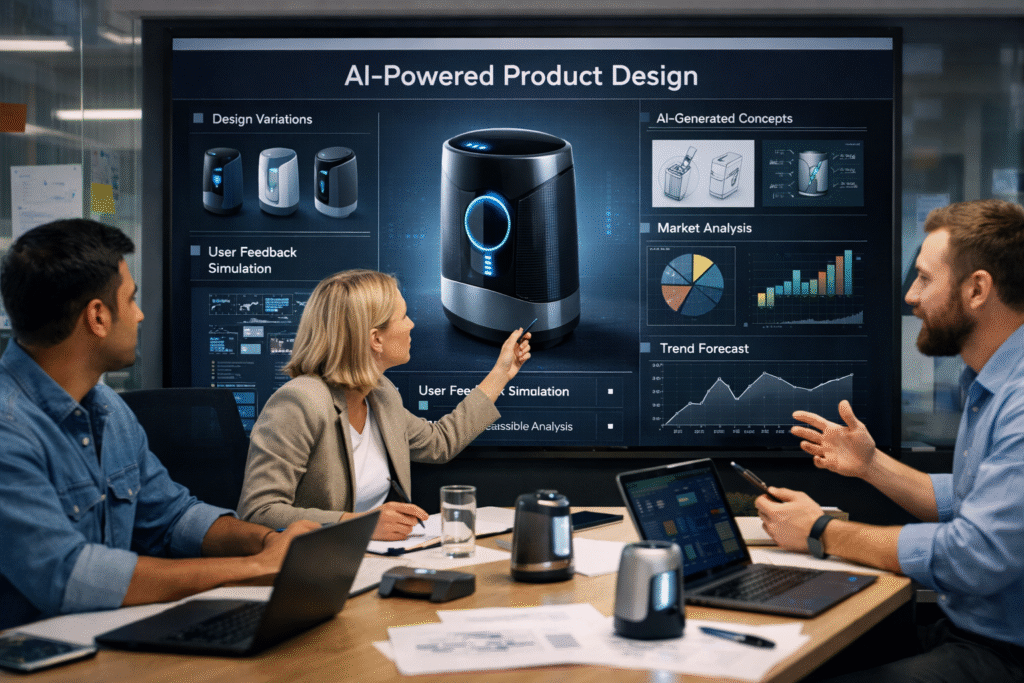
AI tools assist in product design by generating multiple variations based on input constraints. Software development teams use code generation models to build applications faster and test features more efficiently.
Instead of relying solely on intuition, businesses now simulate product launches using AI-driven scenario modeling. These simulations help estimate market response, pricing impact, and customer acquisition costs before actual rollout.

The result is reduced risk and shorter innovation cycles.
AI is reshaping the workforce, not eliminating it.
Most organizations are adopting AI to augment human capabilities rather than replace employees. Marketing professionals use AI for ideation and optimization. Developers rely on AI to accelerate debugging. Customer support agents use AI chat assistants to resolve queries faster.
The demand for AI literacy is growing. Professionals now need skills in prompt engineering, data interpretation, AI tool integration, and automation strategy. Upskilling programs are becoming a standard investment across enterprises.
Companies that prioritize workforce adaptation are experiencing smoother AI transitions and higher productivity gains.
With increased AI adoption comes responsibility.
AI systems rely heavily on data. Ensuring compliance with data protection regulations is critical. Businesses must implement secure data pipelines and transparent usage policies to maintain customer trust.
Generative AI models can reflect biases present in training data. Responsible deployment requires monitoring outputs, auditing datasets, and establishing governance frameworks that ensure fairness and accountability.
Ethical AI is no longer a public relations initiative; it is a core business requirement.
Organizations investing in AI report measurable improvements in cost efficiency and revenue generation.
Automation reduces operational expenses by minimizing manual tasks, decreasing error rates, and optimizing resource allocation.
AI-driven personalization increases conversion rates. Predictive analytics enhances customer retention. Faster product development shortens time-to-market, allowing businesses to capture demand earlier.Return on investment often becomes visible within the first year when AI implementation is strategically aligned with business goals.
Despite its potential, AI integration presents challenges.
Legacy systems may not support modern AI architectures. Migrating data and ensuring compatibility require careful planning.
Employees may fear automation. Leadership must communicate clearly about AI’s role as a collaborative tool rather than a replacement.
Generative AI can produce inaccurate outputs. Continuous validation and human oversight remain essential.Addressing these challenges early improves long-term adoption success.
The Future Outlook
Generative AI is evolving toward multimodal intelligence, combining text, image, video, and structured data processing into unified systems. As these models become more accurate and context-aware, businesses will rely on AI not only for automation but also for strategic advisory roles.
We are entering an era where AI systems function as digital co-pilots in boardrooms, operations centers, and creative studios. Companies that build adaptable infrastructures and invest in AI-driven innovation today will lead tomorrow’s markets.
Generative AI is no longer an experimental trend. It is a transformative force reshaping business strategy, operational efficiency, marketing effectiveness, and product innovation. Organizations that integrate AI thoughtfully, prioritize ethical governance, and invest in workforce upskilling will unlock substantial competitive advantages.
In 2026 and beyond, the question is not whether businesses should adopt generative AI. The real question is how quickly and strategically they can implement it to drive sustainable growth in a rapidly evolving technological landscape